Cow Milk: A Decorative Font for Natural & Playful Design
The Distinctive Character of Cow Milk
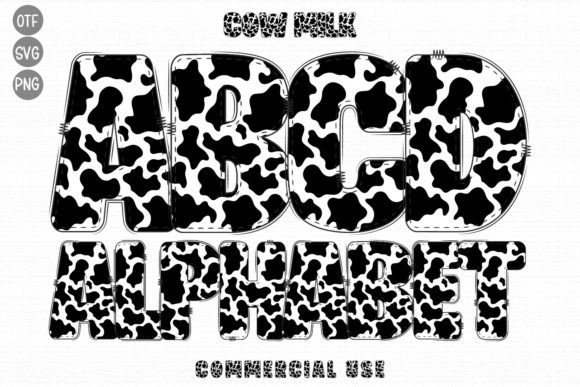
In a world saturated with clean, minimalist typefaces, sometimes a project calls for something with more personality—something that feels organic, tactile, and instantly memorable. This is where Cow Milk enters the scene. It’s not just another display font; it’s a decorative typeface with a unique, cow-skin texture integrated directly into its letterforms. Imagine the familiar black and white pattern, but transformed into a versatile design asset. The result is a font that feels both playful and grounded, perfect for adding a touch of whimsy or a strong nature-inspired aesthetic to your work.
The visual appeal of Cow Milk lies in its texture. Each character, whether uppercase, lowercase, or numeral, features a randomized patch of cowhide pattern. This means no two letters look exactly the same, giving your text an organic, handcrafted feel that static fonts can't replicate. Its personality is friendly, approachable, and slightly rustic. It doesn't scream for attention with sharp edges or complex curves; instead, it invites engagement through its familiar, comforting pattern. This makes it an excellent choice for projects targeting families, children, or anyone with an appreciation for pastoral themes and authentic branding.
Practical Applications: Where This Font Truly Shines
Understanding a font's strengths is key to using it effectively. Cow Milk is a premium font designed for impact in specific contexts, rather than for long-form body text. Its primary role is as a display font, ideal for headlines, logos, and short, impactful statements where its unique texture can be fully appreciated.
Branding and Logo Design: For businesses in the organic food, dairy, artisan craft, or children's product space, Cow Milk can form the cornerstone of a memorable brand identity. Think of a logo for a local creamery, a family-run farm stand, or a children's boutique. The font immediately communicates values of naturalness, care, and a hands-on approach. It pairs surprisingly well with a clean sans serif font for body copy, creating a balanced and professional look.
Packaging and Editorial Design: On product packaging—whether for cheese, yogurt, granola, or handmade soaps—this creative font can make a label stand out on a crowded shelf. In editorial design, it’s perfect for chapter titles in a cookbook, headers in a lifestyle magazine, or pull quotes in a blog post about sustainable living. The texture adds a layer of visual interest that engages the reader on a tactile level.
Digital and Social Media: In the fast-scrolling world of social media, a distinctive font can stop thumbs. Cow Milk is excellent for social media graphics, YouTube thumbnails, or website headers for blogs focused on DIY, gardening, or parenting. Its playful nature is particularly effective for content aimed at children or families, making educational materials or party invitations instantly more fun.
Crafting and Personal Projects: This is where Cow Milk’s compatibility becomes crucial. The black version is fully compatible with Cricut Design Space and other cutting machines, making it a fantastic asset for crafters. Create custom t-shirts, tote bags, wall art, or vinyl decals with ease. The textured effect translates beautifully onto physical materials, adding depth that a standard solid font cannot.
Integrating Cow Milk into Your Design Workflow
Adopting a new typeface into your toolkit requires a bit of strategic thinking. Here’s how to approach Cow Milk to ensure it elevates, rather than overwhelms, your projects.
Evaluate Project Fit: First, assess the project's tone and audience. Cow Milk excels in contexts that are informal, friendly, nature-oriented, or child-focused. It would be less suitable for a corporate law firm's annual report or a high-tech startup's sleek app interface. For those, you’d lean toward a more neutral serif font or geometric sans serif font.
Master Font Pairing: The golden rule with a strong decorative font is to let it be the star. Pair it with a simple, highly readable companion. A classic font pairing strategy is to use Cow Milk for headlines and a clean, open sans serif like Lato, Open Sans, or Montserrat for paragraphs. This creates clear visual hierarchy and ensures your message remains professional and legible. Avoid pairing it with other ornate script fonts or handwritten fonts, as this can create visual chaos.
Consider Readability and Hierarchy: Due to its textured nature, Cow Milk is best used at larger sizes. For web design, this means it’s perfect for H1, H2, or H3 headings, but not for body copy. In print, ensure there is enough contrast between the text and the background. The font’s inherent pattern can reduce readability at small sizes or on busy backgrounds. Always conduct a quick print or screen test to check clarity.
Understand Licensing and File Types: Before purchasing, review the included styles and licensing. The color version of Cow Milk, which likely includes the textured pattern, is only compatible with certain design programs like Adobe Photoshop, Illustrator, Silhouette Studio, and Inkscape. The OTF/TTF files for the color version are not compatible with Cricut. For physical crafting with a Cricut machine, you must use the solid black version. Always check the Ultimate Font Guide for detailed instructions on working with color fonts, as they require specific steps to activate the texture layers.
Build a Cohesive Asset Library: Think of Cow Milk not as a one-off novelty, but as a specialized tool in your broader collection of design assets. Its strength lies in adding a specific flavor. By pairing it with more versatile serif and sans serif families, you create a flexible system that can handle a wide range of design challenges while maintaining a consistent and recognizable brand voice. This strategic approach to building your font library ensures you always have the right tool for the job, enhancing both the recognition and professionalism of your creative output.